The underrated power of really listening
The underrated power of really listening
Chapter 4 of 'Articulating Design Decisions' reminded me that truly listening, pausing, asking the right questions, and understanding what someone means, can transform our work and relationships. Even familiar skills deserve a fresh look.
Reflections
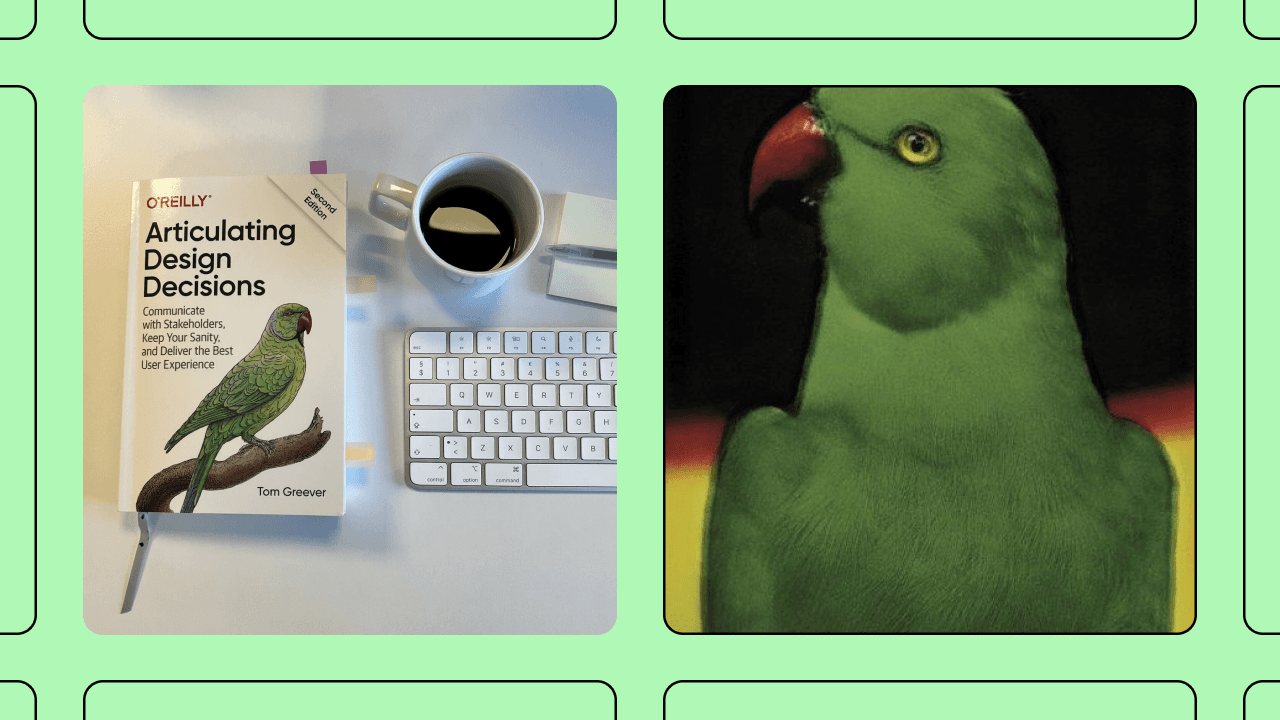
Sometimes the simplest skills are the ones we need to revisit most. Chapter 4 of Tom Greever's Articulating Design Decisions brought this home for me in a way I didn't expect—it reminded me just how powerful it is to truly listen.
We all think we're good listeners. We nod, we wait our turn to speak, we think we're engaged. But real listening? That's something else entirely. It's taking that crucial moment to pause. To ask the right questions. To dig deeper and understand what someone actually means, not just what they're saying on the surface.
In design conversations, and in most conversations, there's what people say and then there's what they mean. The gap between those two things is where misunderstandings live, where projects go off track, and where relationships break down.
Greever's chapter on listening techniques hit me because it's not just about being polite or patient. It's about being genuinely curious. It's about asking "Can you tell me more about that?" or "What's driving that concern?" instead of immediately defending your work or jumping to solutions.
What struck me most is how this skill translates beyond the design critique room. Whether you're talking to a stakeholder about a project direction, a teammate about their concerns, or a friend about what's really bothering them, the principle is the same. Listen with the intent to understand, not to respond.
That pause before speaking? That's what we need more of. That's where you move from reaction to response.
Reading this with my book buddy Terese, my old collegue from Awaze, added another layer to the experience. Even skills we think we've mastered can feel completely new when we revisit them with intention, especially when you're discussing them with someone else. We brought different perspectives, different experiences, different "aha" moments to the same chapter.
It's a good reminder that learning isn't linear. Sometimes you need to circle back to the fundamentals, not because you forgot them, but because you're ready to understand them at a deeper level.
If you work in design, product, or any collaborative field, Articulating Design Decisions is worth your time. But more than that, this particular chapter on listening is worth revisiting even if you've read it before. Even if you think you're already a good listener.
Because there's always another level. There's always more to learn about really hearing what people are trying to tell us.
And honestly? That skill might just be the most valuable one any of us can develop, at work and in life.
In the cover, the second photograph is Photograph L'oiseau, by Sarah Moon.
Digital artwork of a bird created from leaves by artist Josh Dykgraaf


Sign up to my super cool newsletter!
More to Discover


The underrated power of really listening
The underrated power of really listening
Chapter 4 of 'Articulating Design Decisions' reminded me that truly listening, pausing, asking the right questions, and understanding what someone means, can transform our work and relationships. Even familiar skills deserve a fresh look.
Reflections
Sometimes the simplest skills are the ones we need to revisit most. Chapter 4 of Tom Greever's Articulating Design Decisions brought this home for me in a way I didn't expect—it reminded me just how powerful it is to truly listen.
We all think we're good listeners. We nod, we wait our turn to speak, we think we're engaged. But real listening? That's something else entirely. It's taking that crucial moment to pause. To ask the right questions. To dig deeper and understand what someone actually means, not just what they're saying on the surface.
In design conversations, and in most conversations, there's what people say and then there's what they mean. The gap between those two things is where misunderstandings live, where projects go off track, and where relationships break down.
Greever's chapter on listening techniques hit me because it's not just about being polite or patient. It's about being genuinely curious. It's about asking "Can you tell me more about that?" or "What's driving that concern?" instead of immediately defending your work or jumping to solutions.
What struck me most is how this skill translates beyond the design critique room. Whether you're talking to a stakeholder about a project direction, a teammate about their concerns, or a friend about what's really bothering them, the principle is the same. Listen with the intent to understand, not to respond.
That pause before speaking? That's what we need more of. That's where you move from reaction to response.
Reading this with my book buddy Terese, my old collegue from Awaze, added another layer to the experience. Even skills we think we've mastered can feel completely new when we revisit them with intention, especially when you're discussing them with someone else. We brought different perspectives, different experiences, different "aha" moments to the same chapter.
It's a good reminder that learning isn't linear. Sometimes you need to circle back to the fundamentals, not because you forgot them, but because you're ready to understand them at a deeper level.
If you work in design, product, or any collaborative field, Articulating Design Decisions is worth your time. But more than that, this particular chapter on listening is worth revisiting even if you've read it before. Even if you think you're already a good listener.
Because there's always another level. There's always more to learn about really hearing what people are trying to tell us.
And honestly? That skill might just be the most valuable one any of us can develop, at work and in life.
In the cover, the second photograph is Photograph L'oiseau, by Sarah Moon.
Digital artwork of a bird created from leaves by artist Josh Dykgraaf
Sign up to my super cool newsletter!
More to Discover
The underrated power of really listening
The underrated power of really listening
Chapter 4 of 'Articulating Design Decisions' reminded me that truly listening, pausing, asking the right questions, and understanding what someone means, can transform our work and relationships. Even familiar skills deserve a fresh look.
Reflections
Sometimes the simplest skills are the ones we need to revisit most. Chapter 4 of Tom Greever's Articulating Design Decisions brought this home for me in a way I didn't expect—it reminded me just how powerful it is to truly listen.
We all think we're good listeners. We nod, we wait our turn to speak, we think we're engaged. But real listening? That's something else entirely. It's taking that crucial moment to pause. To ask the right questions. To dig deeper and understand what someone actually means, not just what they're saying on the surface.
In design conversations, and in most conversations, there's what people say and then there's what they mean. The gap between those two things is where misunderstandings live, where projects go off track, and where relationships break down.
Greever's chapter on listening techniques hit me because it's not just about being polite or patient. It's about being genuinely curious. It's about asking "Can you tell me more about that?" or "What's driving that concern?" instead of immediately defending your work or jumping to solutions.
What struck me most is how this skill translates beyond the design critique room. Whether you're talking to a stakeholder about a project direction, a teammate about their concerns, or a friend about what's really bothering them, the principle is the same. Listen with the intent to understand, not to respond.
That pause before speaking? That's what we need more of. That's where you move from reaction to response.
Reading this with my book buddy Terese, my old collegue from Awaze, added another layer to the experience. Even skills we think we've mastered can feel completely new when we revisit them with intention, especially when you're discussing them with someone else. We brought different perspectives, different experiences, different "aha" moments to the same chapter.
It's a good reminder that learning isn't linear. Sometimes you need to circle back to the fundamentals, not because you forgot them, but because you're ready to understand them at a deeper level.
If you work in design, product, or any collaborative field, Articulating Design Decisions is worth your time. But more than that, this particular chapter on listening is worth revisiting even if you've read it before. Even if you think you're already a good listener.
Because there's always another level. There's always more to learn about really hearing what people are trying to tell us.
And honestly? That skill might just be the most valuable one any of us can develop, at work and in life.
In the cover, the second photograph is Photograph L'oiseau, by Sarah Moon.
Digital artwork of a bird created from leaves by artist Josh Dykgraaf
Sign up to my super cool newsletter!